
A screenshot used to end arguments. Someone would drop a tidy rectangle of pixels into the replies and that would be that. Receipt. Case closed.
Now it mostly means: “Here’s a thing I want you to believe.”
That shift matters because X runs on fast outrage and thin context. A screenshot is the perfect format for both. It’s portable, emotionally loaded, and designed to skip the slow part where anyone checks whether the underlying post, DM, or timestamp exists outside the image.
The screenshot is a story, not a record
Look closely at how “receipts” work on X. They are rarely presented with the boring details that make evidence useful: a URL, a visible handle you can click, an archive link, a screen recording that shows navigation, or even a second frame that proves continuity. Instead you get one cropped image, often just enough to confirm whatever conclusion you were already leaning toward.
Screenshots are persuasive because they feel like documentation. But they are also easy to shape. Crop out the earlier messages. Hide the time. Cut off the profile picture. Remove the “Edited” label. Swap in a name that looks close enough. Suddenly the argument isn’t about what happened, it’s about whether you trust the person who posted the image.
And on X, trust is usually partisan.
Fake DMs are now a consumer product
It’s not that editing images is new. It’s that the barriers are gone. You no longer need Photoshop skills or the patience to match fonts and UI elements. There are sites built specifically to produce plausible chat screenshots in minutes, including X-style interfaces. For memes and skits, that’s harmless. For smear jobs, it’s a gift.
If you’ve never seen one of these tools, spend 30 seconds with a generator and you’ll understand why “I have screenshots” barely moves the needle anymore. A fake X chat can be drafted like a script: pick the platform skin, type the messages, choose timestamps, add a profile photo, export. The output looks familiar enough to pass in a scroll, which is how most people will encounter it.
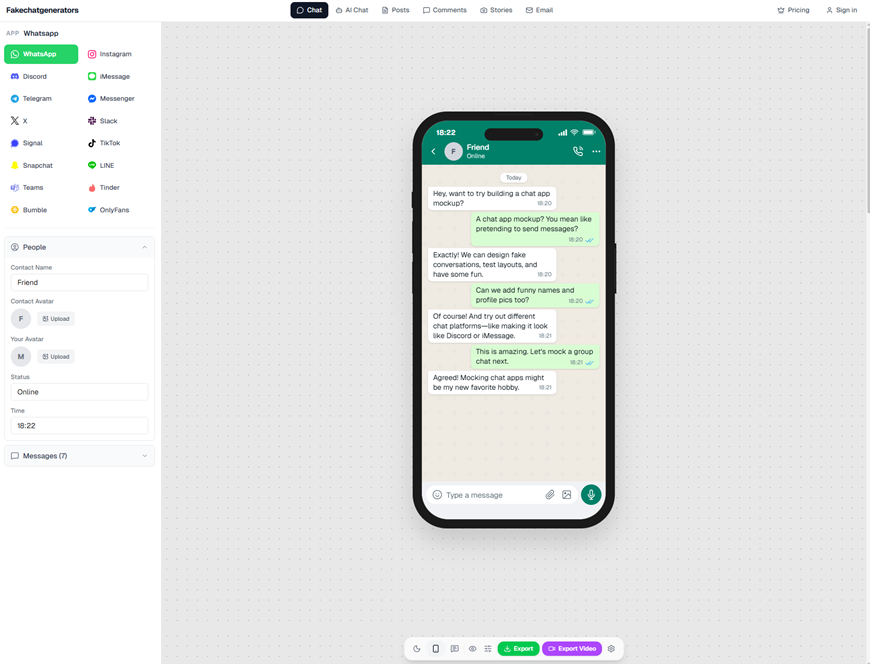
fakechatgenerators.com lets you mock up chat screenshots across 16 platforms
That’s the key. Fake receipts aren’t designed for forensic review. They’re designed for feed-speed belief.
Why “it looks real” is a trap
Real UIs are consistent, which makes them easy to imitate. The same design rules that make apps usable also make them forgeable. When a platform updates its interface, it creates a brief window where fewer people recognize the new details, so fakes can blend in even better. Then there’s dark mode, screen scaling, localization, and a thousand little differences that give forgers plausible deniability. “It’s just my phone settings.” “It’s an older version.” “It looks different on Android.”
Add compression and reposting and you’ve got the perfect fog. The image degrades, artifacts appear, and skeptics lose the ability to point at specific anomalies without sounding like they’re nitpicking.
Meanwhile, the person being accused is stuck arguing against a PNG. No cross-examination, no access to the “original,” no way to show what happened before or after. The screenshot becomes the arena and the judge.
What counts as evidence now?
If screenshots are no longer reliable, what is?
Boring stuff. The kind that doesn’t go viral.
- Direct links and archives. If it’s a public post, a URL is the starting point. If it’s deleted, an archive or cached copy helps. (Not a cropped image of an archive, the archive itself.)
- Screen recordings with navigation. Not foolproof, but harder to fake convincingly at scale. Recording the act of opening the app, going to the profile, and pulling up the message thread adds friction for would-be forgers.
- Metadata and originals. If someone claims a DM screenshot is “raw,” ask for the original file, not the version that’s been through three reposts and a meme account.
- Corroboration. Two independent sources with consistent details beats one dramatic image.
None of this is glamorous. That’s why it’s losing to screenshots.
Detection tools help, but don’t absolve you
There’s a growing market for automated verification, including systems that look for AI generation, manipulation, or document tampering. Tools like an ai image detector advertise specifics that sound reassuring, 98.7% accuracy across 50+ generative models, sub-150ms latency, and customers ranging from journalists to banks and legal teams. That’s useful context: the problem is large enough that professionals are paying to triage it quickly.
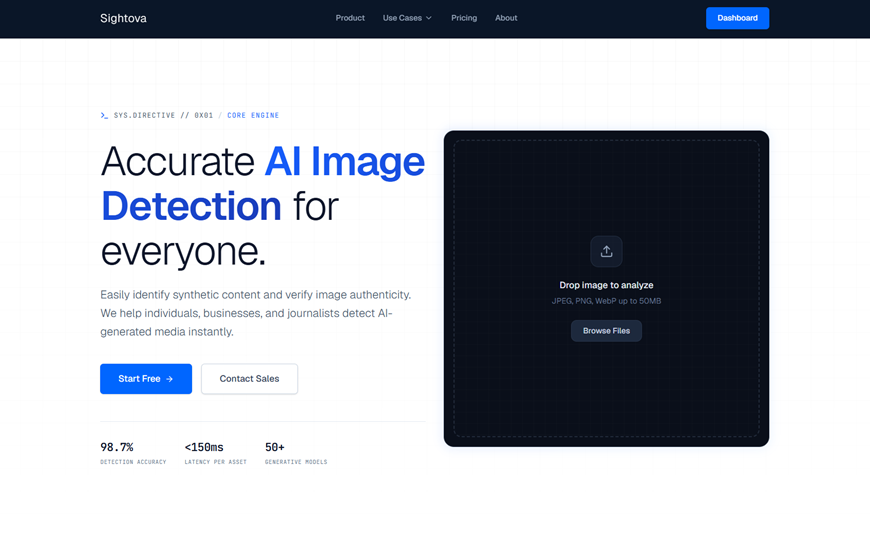
sightova.com flags AI-generated, tampered, NSFW, and violent imagery in milliseconds
But even the best detector isn’t a magic stamp. Detection is probability, not truth. False positives happen, false negatives happen, and adversaries adapt. A screenshot can be “not AI-generated” and still be misleading through cropping, selective framing, or manual edits. The absence of a detection flag is not proof of authenticity, it’s just the absence of one kind of red flag.
A new rule for X receipts: treat them like rumors
Here’s the posture shift that saves time and sanity: treat screenshots as leads, not conclusions.
A screenshot can justify asking questions. It can point you toward a link, a thread, a timeframe, a person to contact. It can even be part of a larger case. But alone, in 2026, it’s closer to a tip than testimony.
The hard part is emotional. Screenshots arrive pre-packaged with moral clarity: villain, victim, punchline. They ask you to react now and verify later, which is exactly backwards.
So the next time someone posts “receipts” on X, try the least viral response possible. Pause. Ask what you would need to see to believe it if it implicated your side instead of the other one. And remember that the cleanest-looking evidence is often the easiest to fabricate.